
“Wood cabinet,” “MDF door” or “plywood box” is not a complete cabinet specification. Compare the core, visible surface, edge, back, exposed cut-outs and connections as a system, then ask for the documents needed for the project and destination. A sample image can explain a material family without proving grade, performance or availability.
Name every layer of the cabinet part
| Layer or part | Questions to ask | Why it matters |
|---|---|---|
| Core | What panel or solid material forms the part, at what project-specified thickness and grade? | It affects machining, fasteners, weight, edge treatment and the evidence needed for the intended use. |
| Face or finish | Is the visible surface a film, laminate, melamine, veneer, paint, lacquer or another finish? | The finish controls appearance, touch, cleaning and the way edges and repairs are handled. |
| Edges and openings | How are exposed edges, holes, cut-outs, sink zones and service penetrations finished? | A face material description alone does not describe vulnerable or visible transitions. |
| Backs and internal parts | Which materials apply to backs, shelves, drawers, dividers and plinths? | Hidden parts may face different loads, ventilation, cleaning and service requirements. |
| Connections | How are panels joined, supported, adjusted and fixed to the building? | Construction and installation can change the outcome even when the material names are the same. |
Use material families as a starting point
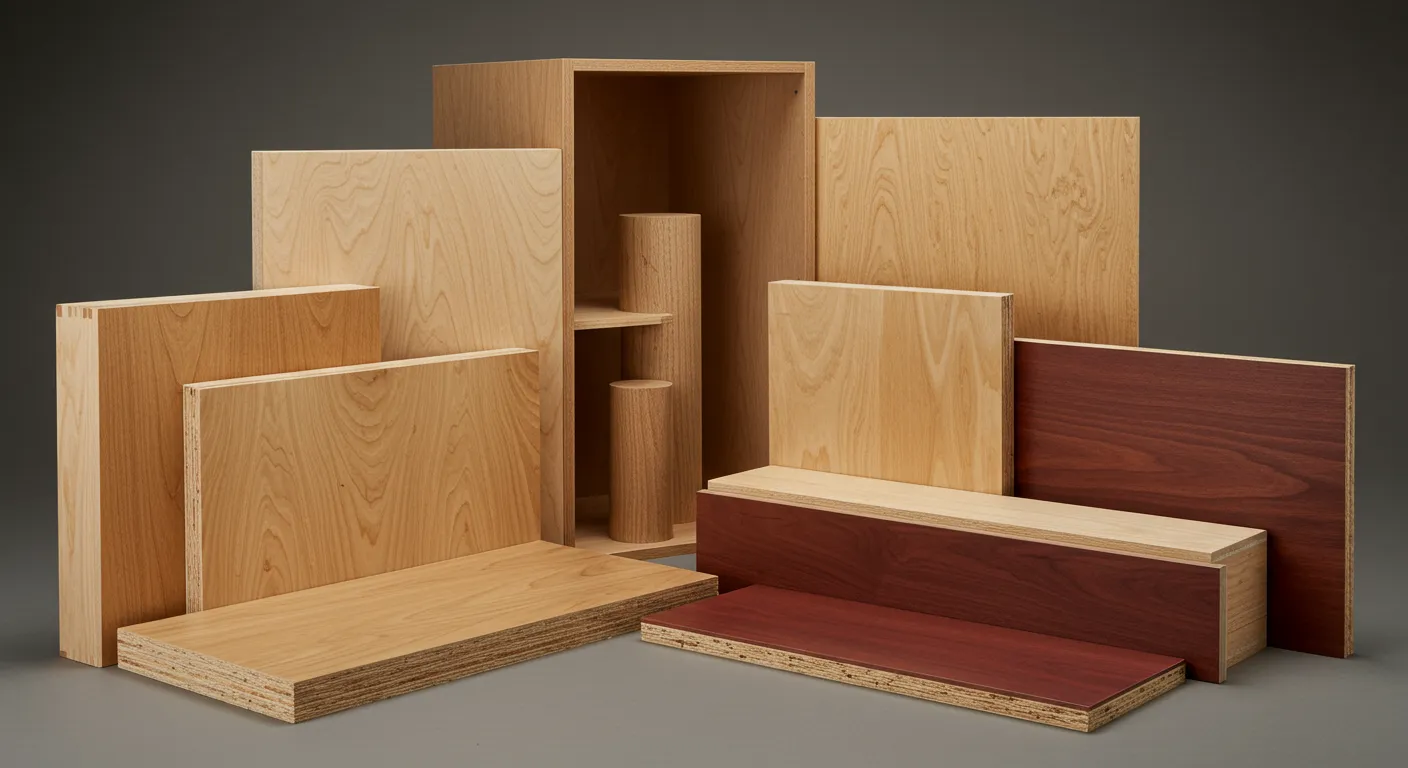
Solid timber, plywood, MDF, particle board and other material families can each be configured in different ways. Avoid ranking them with a single “best” label. Compare the intended part, finish process, span, support, fixing, humidity and splash conditions, cleaning, expected use, project documentation and price as one decision.
Describe use conditions before requesting an option
- Room exposure: kitchen, bathroom, laundry, conditioned living space or another environment; include ventilation and known splash or heat sources.
- Part function: door, box, shelf, drawer, worktop support, back, end panel, plinth or decorative panel.
- Contents and movement: expected items, span, access, hardware and frequency of use.
- Appearance: face finish, edge visibility, grain or pattern, sheen and acceptable variation.
- Project evidence: destination requirements and any specific test report, certificate, declaration or product information requested by the buyer’s project team.
Where performance or compliance matters, request evidence tied to the proposed material, finish, production source and destination requirement. A group certificate or a sample photograph should not be extended to every cabinet part or production route.
Review the construction at the difficult junctions
Use sections or details at sinks, basins, appliances, exposed ends, tall doors, long shelves, lighting recesses, service openings and wall fixings. Identify which edges are sealed or visible, how backs meet services, how shelves are supported and how damaged or serviceable parts can be reached. Confirm the site wall, floor and fixing responsibility separately from factory cabinet construction.
GEORGE Group can propose project-configured materials and construction. Final availability, grade, performance, documentation, production source, dimensions and installation depend on the approved project specification and quotation.
Send a material decision brief
Provide cabinet plans and elevations, room and exposure conditions, intended contents, finish references, areas of splash/heat/service access, destination and required project documentation. State whether the priority is appearance, specific evidence, repairability, weight, cost or another factor, and identify who approves the specification.
The colours-and-finishes page handles visible appearance across a room. The hardware page handles moving components. This page handles the cabinet part from core to face, edge and connection.
Start a cabinet material-and-construction enquiry. Include the project location, rooms, drawings, use conditions, finish direction and any document requirements that must be checked.